Customs Clearance in the Philippines: A Complete Guide for Importers and Exporters
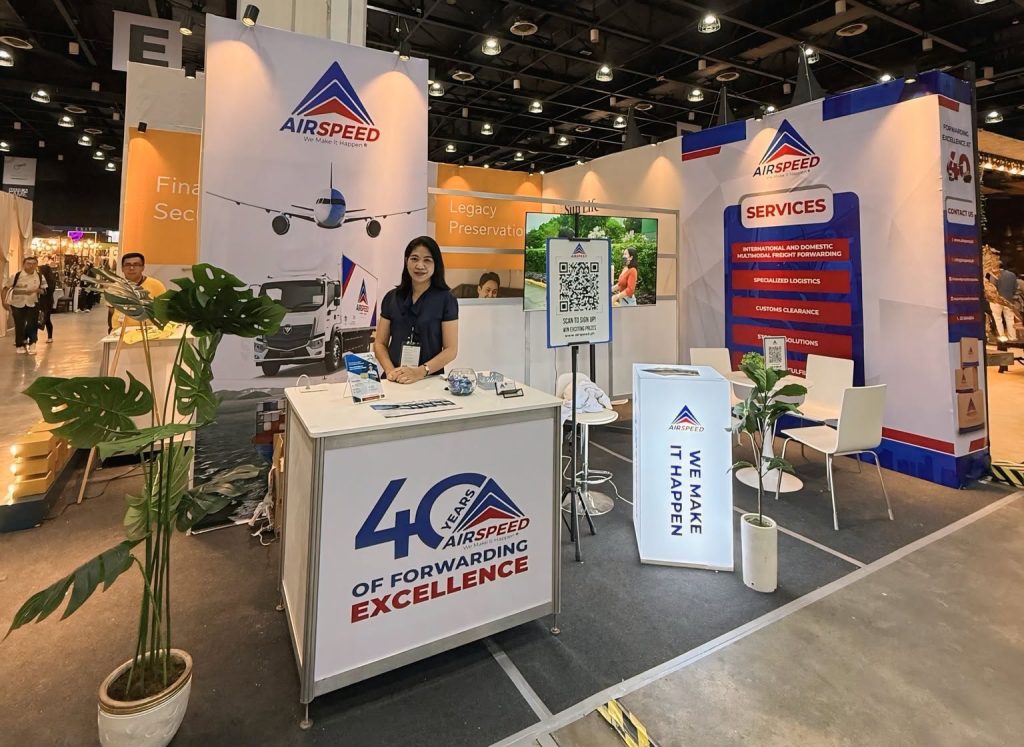
In a single month, Airspeed sat with shrimp producers in Bacolod, designers and lifestyle brands at Manila FAME, and semiconductor manufacturers at the country’s electronics conference. Frozen seafood, handcrafted furniture, and microchips have nothing in common — not their value, not their handling, not their buyers.
They share exactly one thing. Before any of them reaches a foreign customer, it must pass customs. And that gate stops more Philippine shipments than weather, capacity, or distance combined.
What Customs Clearance Actually Involves
Customs clearance is the process of getting goods lawfully approved to leave or enter a country. In practice it means four things: declaring the shipment accurately, classifying the goods under the correct tariff heading, securing whatever permits and certificates the product requires, and settling any duties and taxes owed.
In the Philippines this runs through the Bureau of Customs, frequently alongside other government agencies with authority over specific product categories. It applies in both directions — imports and exports — and it applies whether you are moving a single pallet or a full container.
Why Shipments Actually Get Held
Very few shipments are stopped for dramatic reasons. They are stopped for clerical ones.
The recurring causes are incomplete or inconsistent documentation, incorrect tariff classification, a missing licence or permit, undervalued or misdeclared goods, and unpaid duties. Each is entirely preventable, and each carries the same penalty: your cargo sits. Storage fees accrue daily. Perishables degrade. Production lines idle. And the longer goods wait, the more exposed they are — which is why keeping cargo moving is itself a form of keeping cargo secure.
The Same Gate Looks Different in Every Industry
This is the part that catches first-time exporters.
Perishables are governed by the clock. Seafood and produce require health and plant certifications, and clearance delays do not merely postpone the shipment — they destroy it. For a shrimp exporter, hours matter more than fees.
Electronics and semiconductors are governed by value and classification. Components are high-value, precisely specified, and frequently move through export processing zones with their own movement rules. A misclassified part is not a rounding error; it is an audit exposure. Speed, security, and precision are not marketing words in this sector — they are the specification.
Design and lifestyle goods are governed by inexperience. Furniture makers, artisans, and homeware brands are often exporting for the first time, and the documentation is unfamiliar territory. Their products are ready for the world long before their paperwork is.
Same gate. Three entirely different failure modes.
Consolidation, FCL, LCL — and the Paperwork Each Requires
How you ship changes what you file. A Full Container Load (FCL) carries one consignment and one clean set of documents. A Less than Container Load (LCL) shares space with other shippers, meaning your cargo’s release can depend on paperwork you do not control. Project consolidations and project cargo handling, where multiple shipments are combined into a coordinated movement, add another layer of documentation to align.
None of this is a reason to avoid consolidation — it is usually the economical choice. It is a reason to have someone competent managing the filings, because sea freight economics only benefit you if the container clears.
What a Customs Broker Actually Does For You
A licensed customs broker handles the entire clearance process on your behalf: preparing and lodging declarations, classifying goods, securing permits, coordinating with the Bureau of Customs and other agencies, and resolving holds when they occur.
Airspeed’s customs clearance service sits alongside its air freight, sea freight, specialized logistics, and warehousing and distribution operations — which matters more than it sounds. When clearance, transport, and storage sit with one provider, a customs hold is a problem to be solved rather than a dispute between vendors. For businesses preparing a first international shipment, our guide to international freight forwarding covers the wider process.
Clear Customs with Confidence
Whether you export shrimp, furniture, or semiconductors, the gate is the same and the cost of getting it wrong is the same. Request a quote or email [email protected], and let Airspeed make it happen.