From Kitchen to Market: The Logistics Behind a Growing Filipino Food Business
Food is the least forgiving cargo there is. A delayed shipment of hardware is an inconvenience. A delayed shipment of frozen goods is a loss — and potentially a food safety incident. For the Filipino food entrepreneurs filling exhibition halls like IFEX Philippines each year, the product is rarely the problem. Getting it to customers, intact and on schedule, usually is.
That challenge changes shape as a food business grows. Here is what it looks like at each turn, and what a food brand should demand from its logistics partner.
Food Is Unforgiving Cargo
Every food product carries constraints that ordinary goods do not. Temperature ranges must hold from origin to destination. Shelf life shrinks with every hour in transit. Packaging must protect against crushing, contamination, and moisture. And food safety regulations apply throughout, not just at the point of sale.
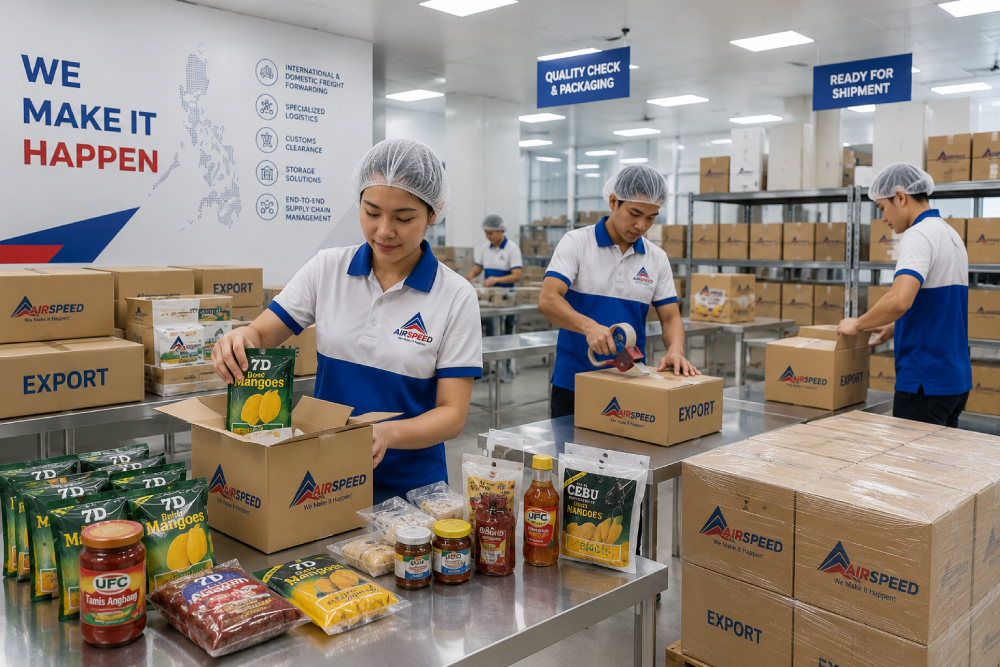
This is why specialized logistics handling matters so much for the category. Chilled and frozen goods require an unbroken cold chain — a single warm loading bay or unrefrigerated final leg can compromise an entire consignment. Dry goods are more forgiving but still demand careful stacking and clean storage. Matching the handling to the product is not a premium service; for food, it is the baseline.
Storage Is Where Margins Are Won or Lost
Ask any growing food brand where its money quietly disappears, and the answer is often storage. Product that expires before it sells, stock lost to poor inventory rotation, goods damaged because they were stacked wrong — these are silent, recurring losses that never appear as a single dramatic failure.
Proper storage solutions address this directly, with facilities suited to the product, disciplined inventory management, and rotation practices that move older stock first. For food businesses, warehousing is not simply a place to keep things. It is an active part of protecting product quality and protecting margin.
When Orders Outgrow the Kitchen
There comes a point in every successful food business when the orders stop feeling like good news. Boxes colonize the living room. Evenings disappear into packing and labeling. The founder who should be developing recipes and building the brand is instead printing waybills.
This is the moment to outsource fulfillment. E-commerce fulfillment takes over receiving, inventory management, picking, packing, and labeling, then hands orders to a nationwide last mile delivery network. Orders ship faster and more accurately than a stretched founder can manage — and, more importantly, the founder gets their time back for the work only they can do.
When the Market Goes Global
For food businesses with export ambitions, the requirements multiply. International shipments demand correct product classification, health and safety certification, and compliance with the importing country’s food standards. Customs clearance expertise becomes essential, because a shipment held at the border is a shipment losing shelf life by the day.
Transport mode matters just as much. Fresh and chilled products typically move by air freight, where speed preserves the product’s value — the same principle behind Philippine agricultural exports flown to Asian and European markets. Shelf-stable and packaged goods often travel more economically by sea. Choosing correctly is the difference between an export that builds a market and one that quietly costs money.
Grow Your Food Business with Airspeed
From cold chain handling and secure storage to fulfillment and export support, Airspeed offers end-to-end logistics built for the demands of food and beverage. Whether you are shipping across the city or sending Filipino flavors to the world, request a quote or email [email protected] — and let Airspeed make it happen.