Green Logistics in the Philippines: What Sustainable Delivery Actually Requires
Nearly every logistics company in the country now describes itself as sustainable. Almost none of them will tell you by how much.
That gap is the whole subject. Sustainability in logistics is unusually easy to claim and unusually easy to verify, because the meaningful changes are physical: what a vehicle burns, what a parcel is wrapped in, what a warehouse consumes. Either the numbers moved or they did not.
Why Logistics Has a Footprint Problem
The industry’s environmental cost comes from three places, and they are not equally visible.
Fuel is the obvious one — every kilometre driven, flown, or sailed has an emissions cost, multiplied across millions of shipments. Packaging is the second, and it is where most waste is generated per parcel. Facilities are the third: warehouses consume power continuously, whether or not anything is moving through them.
Reducing any of these means changing operations rather than messaging. That is precisely why it is worth asking a logistics partner what, specifically, they have changed.
Electric Vehicles: The Visible Half
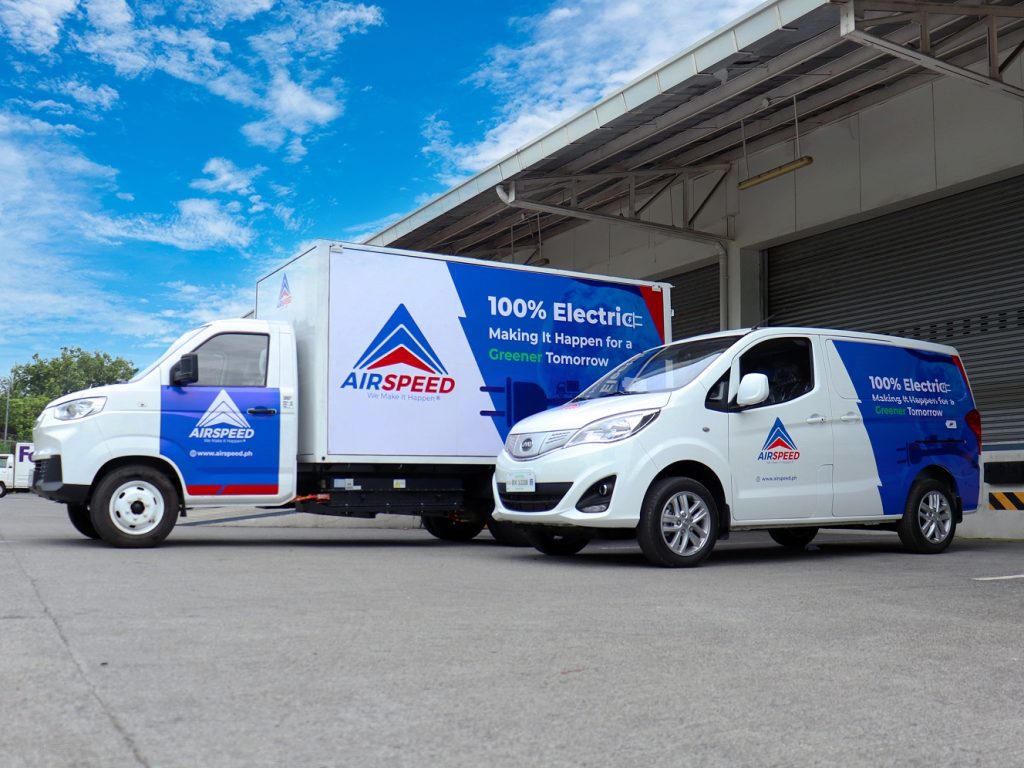
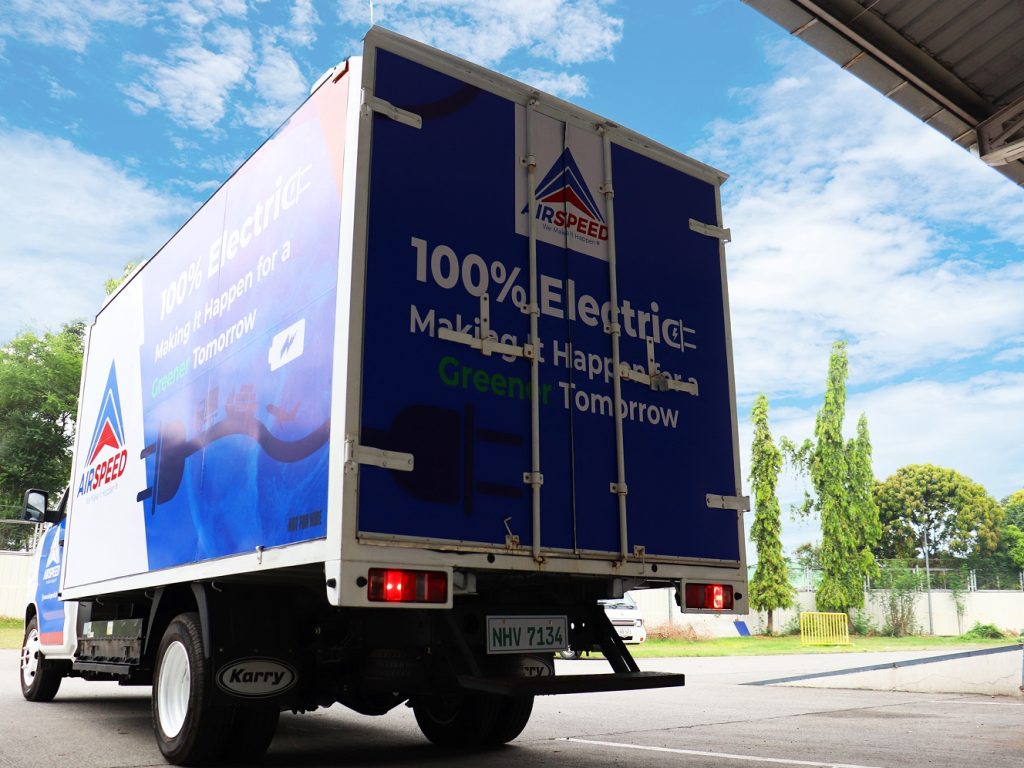
Airspeed has added electric vehicles to its fleet, running from Metro Manila into the provinces with zero tailpipe emissions and greater range than earlier generations allowed.
Range matters more than it sounds. The early objection to EVs in Philippine logistics was that they could not cover provincial distances, confining them to token urban routes. Vehicles that travel further make electrification an operational choice rather than a demonstration.
EVs are also an unusually good fit for last mile delivery specifically. Last-mile routes are stop-start, urban, and short-hop — the exact conditions where combustion engines are least efficient and electric drivetrains are most. Cleaner air in the places where the most people breathe it is not a side effect; it is the point.
Packaging: The Invisible Half
This is where the more interesting number sits. Airspeed is replacing 75% of its bubble sheet consumption with shredded carton packaging.
Plastic bubble wrap protects goods well and is almost impossible to recycle through ordinary waste streams, so nearly all of it ends its life as landfill. Shredded carton performs the same cushioning job using material that is already recyclable, and that can often be made from carton waste the business generates anyway.
A three-quarters reduction is a substantial operational change: different suppliers, different equipment, retrained packing teams. It is also the kind of commitment that can be checked, which is what separates it from a slogan. If a provider cannot give you a figure, there may not be one.
Sustainability as Governance, Not Marketing
In July 2025, Airspeed took part in the launch of the ESG Program: Elevate, Sustain, Grow at The Manila Hotel, held as part of the Employers Confederation of the Philippines’ 50th anniversary — a gathering of companies committing publicly to sustainable transitions.
The value of a public commitment is that it becomes checkable. Airspeed’s stated initiatives there were concrete: electric vehicles, eco-friendly packaging, and coastal clean-ups. The third belongs on the list precisely because it is not operational. Purpose-driven logistics is partly about what a company does with its footprint, and partly about what it does for the communities that live inside it. More detail is on Airspeed’s sustainability page.
What to Ask a Logistics Partner About Sustainability
Whoever you are evaluating, these questions cut through quickly:
- What have you actually changed, and by what percentage? Vague commitment is not a commitment.
- What are your vehicles running on, and on which routes? A single EV on a showcase route is a photograph, not a fleet.
- What is my parcel wrapped in, and can it be recycled here? Packaging is the footprint your customer physically holds.
- Where are you publicly accountable? A commitment made in a room full of peers is harder to quietly abandon.
Deliver Responsibly
Reliability and responsibility are not a trade-off — and the companies that treat them as one usually deliver neither. Request a quote or email [email protected], and let Airspeed make it happen, for your business and for the places it moves through.