What is a 3PL — and Does Your Business Need One?
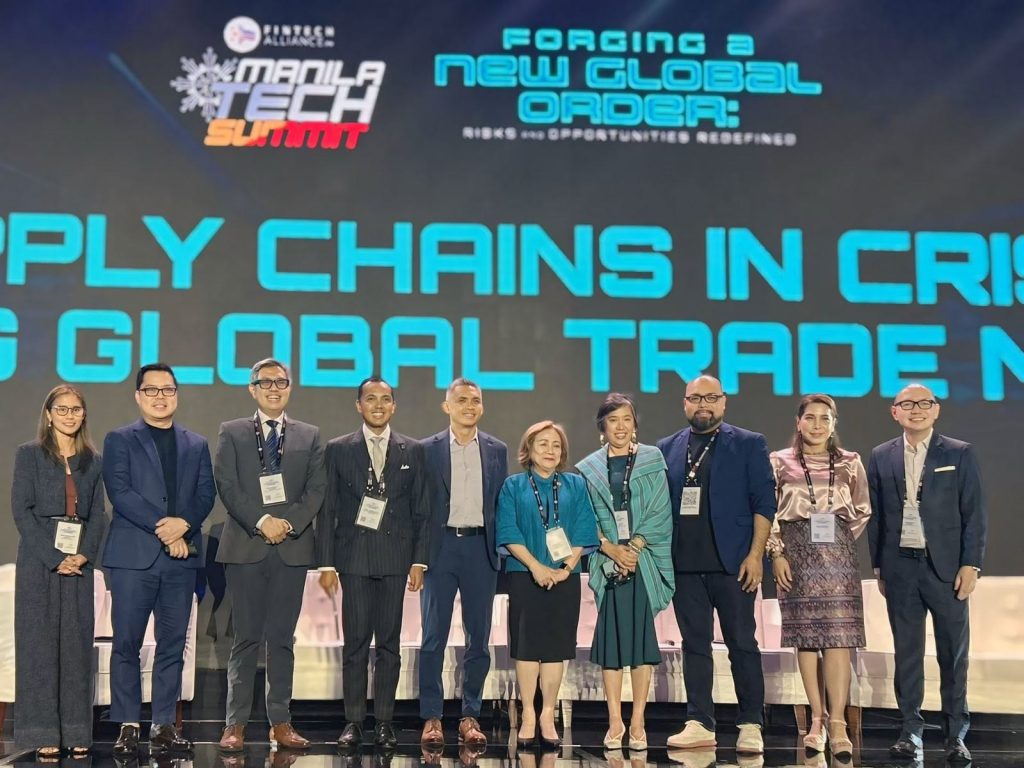
At the Manila Tech Summit 2025, Airspeed Chairperson Rosemarie Rafael joined a panel with an unusually blunt title: Supply Chains in Crisis: Rethinking Global Trade Networks.
The framing was deliberate. Disruption is no longer an event that interrupts normal conditions — it is the normal condition. And for a growing business, that raises an awkward question. You can barely keep up with your own orders. How exactly are you meant to build a supply chain that survives a crisis?
For most companies, the answer is that you do not build it. You partner with someone who already has.
Defining a 3PL
A third-party logistics provider, or 3PL, is a company that runs logistics functions on your behalf: receiving and storing inventory, managing stock, picking and packing orders, and delivering them to your customer.
Instead of leasing warehouse space, hiring a packing team, and coordinating couriers, you hand those operations to a specialist. The 3PL becomes the engine room of your supply chain, and you get back the hours you were spending inside it.
The Signs You Have Outgrown Doing It Yourself
The symptoms are consistent across industries.
Inventory has colonised space that was meant for something else. Order volumes spike during promotions and your packing capacity does not spike with them. Shipping errors have started appearing in customer reviews. You want to sell into Visayas and Mindanao but cannot see how to deliver there reliably. And the founder — the person whose judgment the business actually depends on — is printing labels at eleven at night.
None of these are failures. They are what growth looks like just before something has to change.
From Storage to Doorstep, Under One Roof
What makes a 3PL work is that the pieces connect.
Storage solutions hold and organise the inventory. E-commerce fulfillment handles order management — picking, packing, labeling — so orders leave accurately and fast. Last mile delivery completes the journey to the customer’s door. And for nationwide distribution of dry and non-perishable goods, Ro-Ro moves cargo across the islands without repeated handling.
Because these sit with one provider, your inventory record, your orders, and your deliveries stay in agreement. That sounds administrative. It is actually the difference between a customer receiving what they ordered and a customer receiving an apology.
Resilience Is the Real Argument
Cost and convenience are how 3PLs are usually sold. Neither is the strongest case.
The strongest case is that a supply chain built for average conditions fails under pressure, and pressure is now routine — port congestion, weather, demand shocks, carrier capacity. A business that owns its own logistics owns its own bottleneck. A business that partners with a provider operating across air, sea, and land inherits alternatives it could never justify building alone: another route, another mode, another warehouse, another day of capacity.
That is what tech-enabled, customer-centric supply chains actually mean in practice. Not dashboards. Options.
Grow Without the Growing Pains
If your business has outgrown its own logistics, Airspeed has the storage, fulfillment, and delivery infrastructure to take it from here. Request a quote or email [email protected], and let Airspeed make it happen.